
Lead product designer at a software agency acquired by Shopify
Shortening the distance for software teams
Lead Product Designer
Internal Tool → Product
HR & Agency SaaS
Web + Mobile
Two-Sided UX
Acquired by Shopify
How might we
turn an internal tool into a product teams actually want to use?
How might we
design for two different user types without adding complexity for either?
How might we
move quickly without sacrificing long-term product quality?
The context
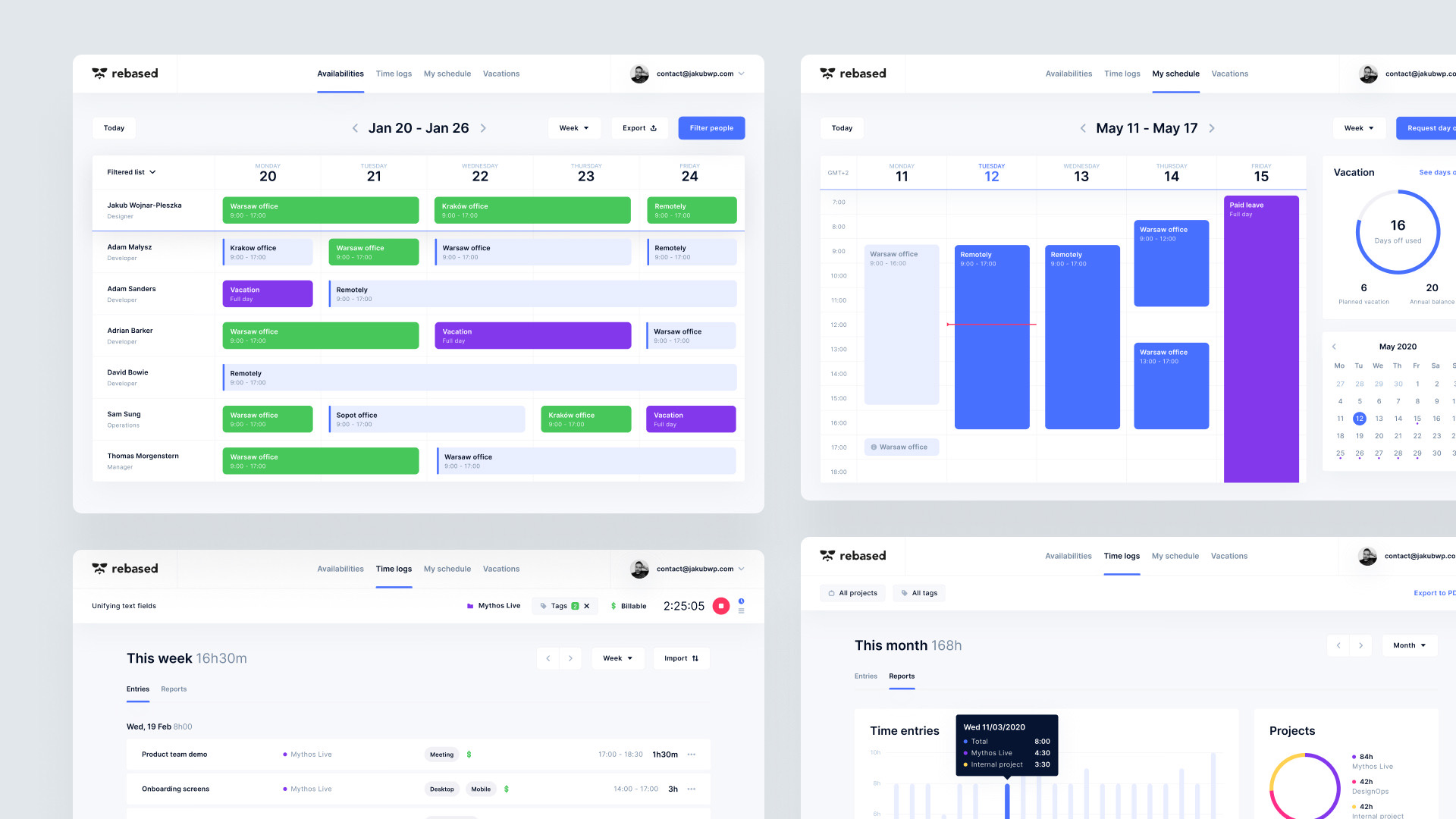
Rebased was a software development agency that hired world-class developers and placed them with product companies. They had built an internal tool called Harmonogram - a management platform for tracking team schedules, time, and project progress - that had grown to a point where it was running the day-to-day operations of the agency. The problem was clear: it had never been designed.
The tool worked because the team had built workarounds. But as Rebased grew, and as they began evaluating whether Harmonogram could become a standalone product, its inconsistencies became a blocker. They needed a version that could work for both employees and managers without requiring institutional knowledge to operate.
The challenge
The product had two distinct user groups with fundamentally different needs. Employees needed a fast, low-friction way to log time, check their schedules, and see what was expected of them. Managers needed visibility across the whole team - project status, capacity, reports - without losing the ability to act on what they were seeing.
There was no shared design language, no component system, and no consistent interaction patterns across the tool. Screens had been built independently by engineers solving immediate problems. The redesign could not just make things look better. It had to establish a foundation for a product that could be handed to someone who had never used it before and still make sense.
What I owned
I owned the product design end to end, starting with a full audit of the existing system. Rather than redesigning from scratch, I extracted what was working, mapped every existing component, and used that to define the new system's boundaries before redesigning anything.
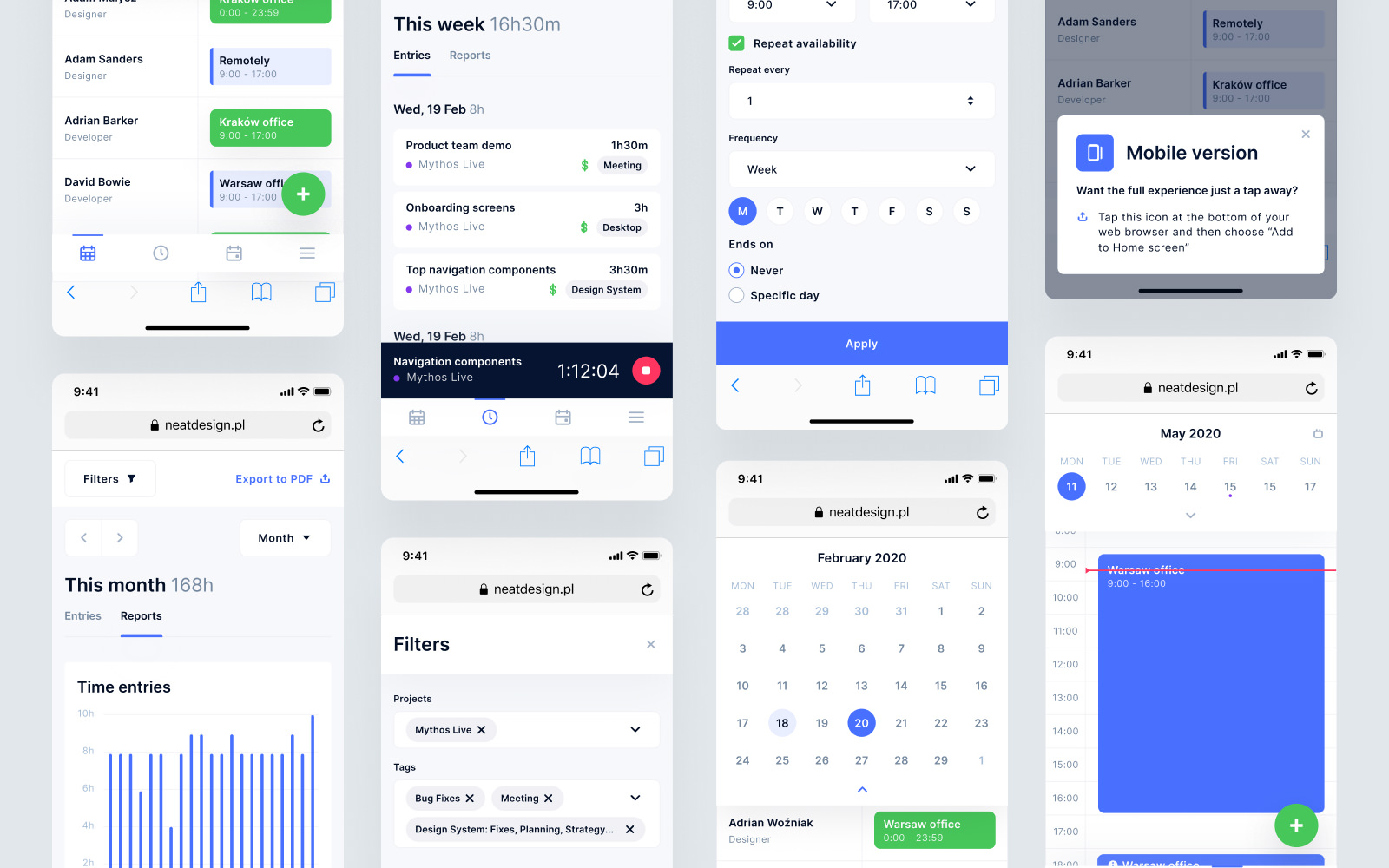
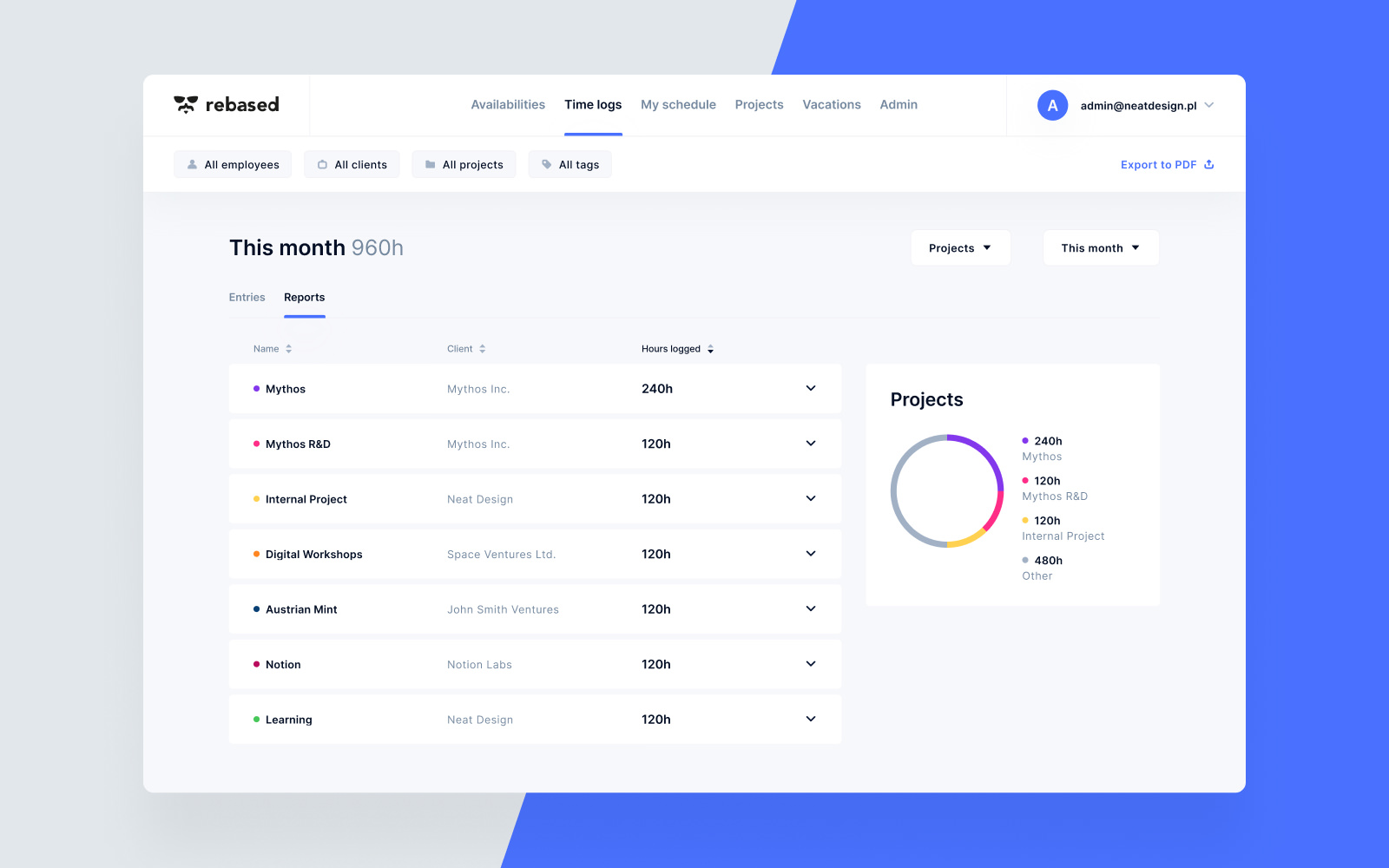
I redesigned all core features across web and mobile: scheduling, time tracking, project management, and reporting. I designed for both user types in parallel, ensuring the manager view surfaced team-wide data without burdening employees with the same complexity. I established a component system that the team could build on without rebuilding the same patterns for every new feature.
Impact
The redesigned product unified the experience across both user groups and replaced the patchwork of independently-built screens with a coherent system. The tool that had required tribal knowledge to use became something new team members could navigate without onboarding support.
Rebased was subsequently acquired by Shopify. Harmonogram continued to operate as their internal management platform post-acquisition.
Why this project is relevant
Rebased happened to be a software agency. The design challenge was not unique to agencies.
The problem - taking something that works internally and turning it into something that works for anyone - comes up constantly in early-stage SaaS products. Internal tools that become products, prototypes that turn into platforms, and MVPs that need to scale. The design thinking required is the same: identify what actually matters, establish a system before adding features, and design for users who do not share your team's context.
This is the kind of early, high-stakes product work I bring to founders who need to move fast and build something that lasts.
"The connection between the newest design trends and usability has made our product user-friendly, thus the user doesn’t get lost while searching for any information."