
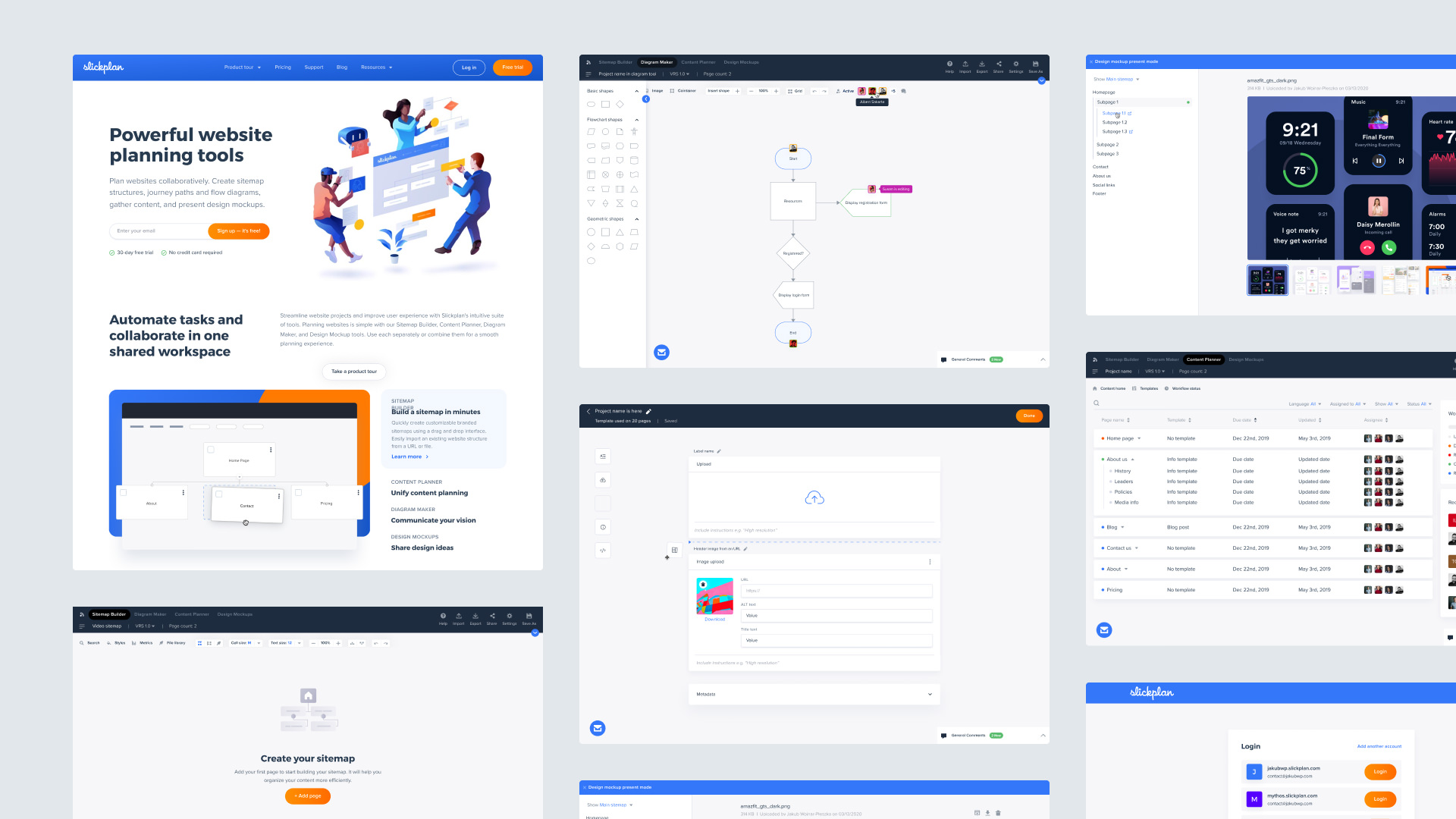
Redesigned a mature SaaS product used by agencies and freelancers
Simplifying content creation and website planning
Lead Product Designer
B2B SaaS
Website Planning
4-Tool Redesign
Design System
20% YoY MRR Growth
How might we
modernize an established product without disrupting existing users?
How might we
simplify complex planning workflows for product teams and agencies?
How might we
evolve a four-tool platform while keeping the experience consistent?
The context
Slickplan is a website planning suite built by Awmous, an Ohio-based SaaS company. The product had been running for over ten years and served agencies and freelancers who needed tools for sitemaps, diagrams, content planning, and design mockups - all in one place.
By the time I joined the project, Slickplan had an established user base that depended on the product, a suite of four core tools, and a growing gap between what the platform looked like and what the market expected from modern SaaS. The challenge was not whether to redesign - it was how to do it without breaking what users already relied on.
The challenge
Slickplan's tools had been built and extended over years without a unifying design system. Each tool had its own visual conventions, interaction patterns, and edge cases. For new users, the platform required too much learning before they could get value from it. For existing users, the interface had accumulated complexity that made common tasks slower than they needed to be.
The redesign had to accomplish two things simultaneously: simplify the experience for new users discovering the platform, and modernize the interface without removing the depth that retained existing customers. Getting either wrong would hurt retention or acquisition.
What I owned
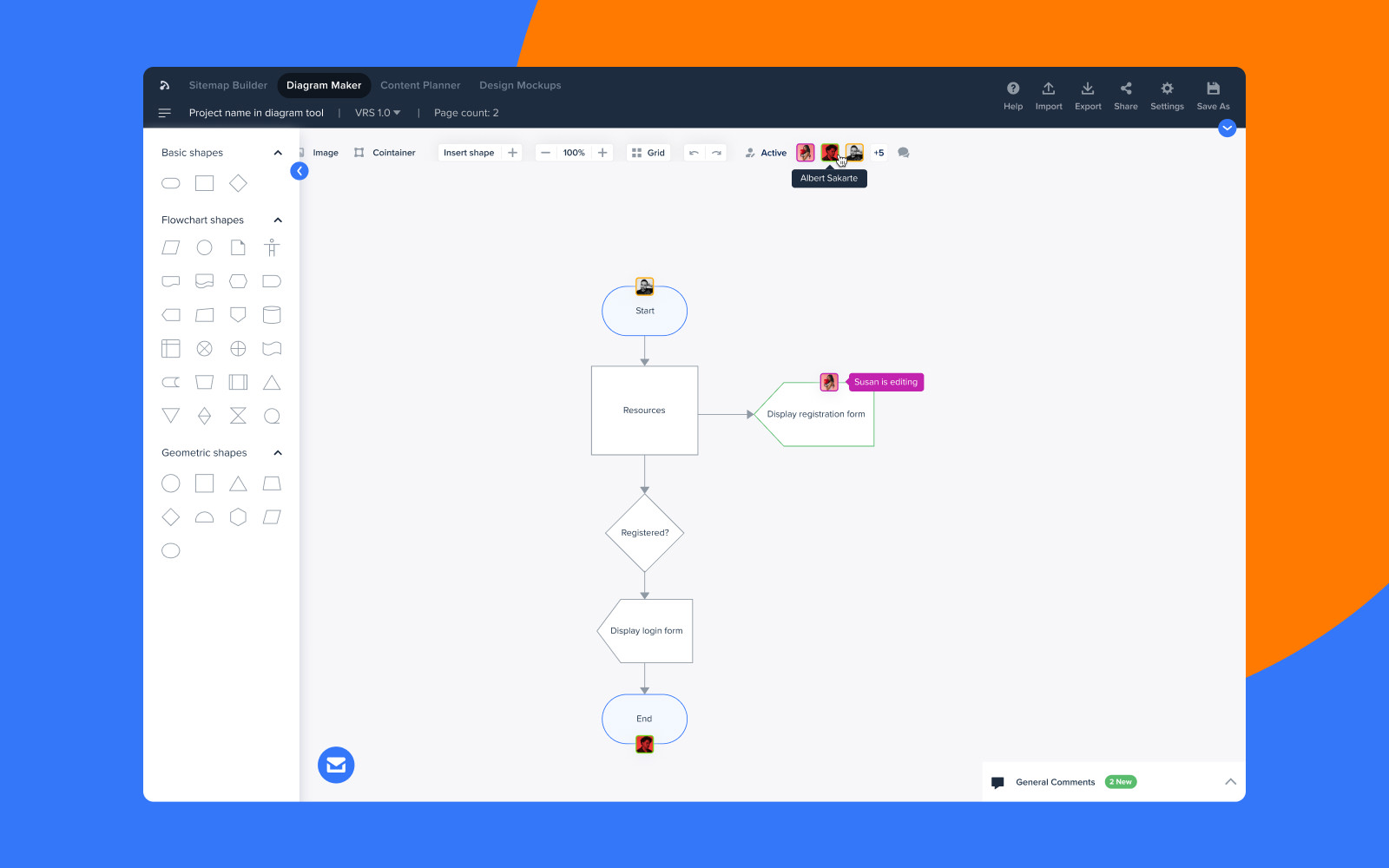
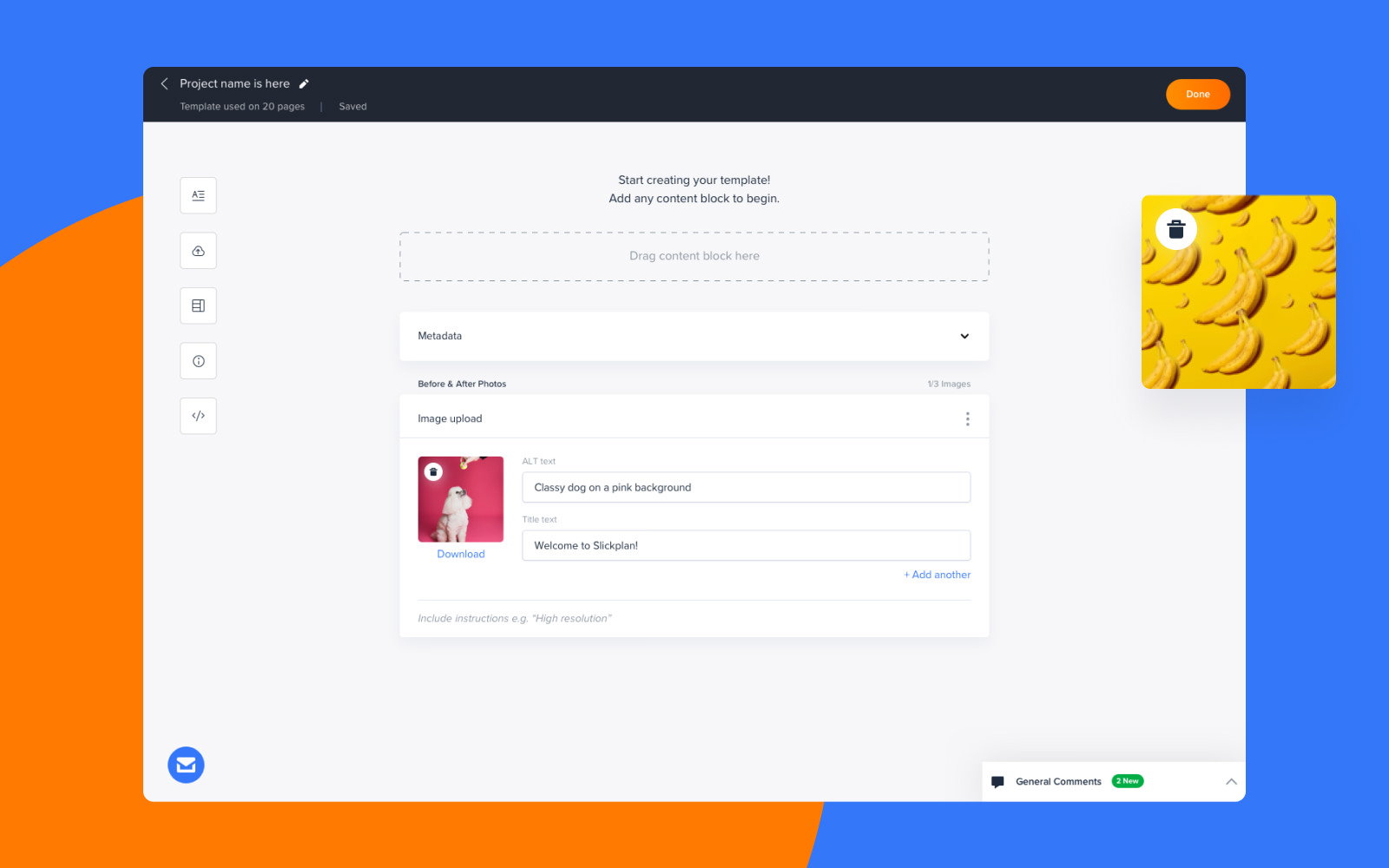
I owned product design across all four tools: sitemap builder, diagram maker, content planner, and design mockups. I worked directly with a UX researcher and a product manager, using user feedback and competitive analysis as the foundation for every design decision.
I redesigned each tool to reduce the interaction cost of common workflows while preserving advanced capabilities behind appropriate layers of the UI. I unified the visual language across all four tools, establishing a shared component system and style guide that had not existed before. I worked through the design system collaboratively with the product manager to ensure the new patterns could scale as the platform evolved.
Impact
Despite increased competition from both direct website planning tools and indirect solutions that had emerged since Slickplan's initial launch, the redesign contributed to 20% year-over-year MRR growth.
The platform now has a unified visual language across all four tools. New users can reach the core value of each tool faster, and existing users retained the depth they depend on. The component system established during this engagement gave the team a foundation to ship new features consistently.
Why this project is relevant
Slickplan happened to be a website planning tool. The challenge was one that mature SaaS products face in every category.
When a product has been running for ten years and has an established user base, redesigning it is not the same as designing something new. The risk of breaking what works is real. The tension between what new users need and what existing users rely on is real. Getting it wrong on either side has measurable consequences.
This is design work I do for SaaS teams that have outgrown their current product experience: bringing the interface up to current standards, establishing the system underneath it, and doing it in a way that does not require the user base to relearn what they already know.
"The continued support from the Slickplan community has always been a driving force behind our innovation. Slickplan 2.0 is a reflection of their feedback and our team’s drive to push website planning further."