
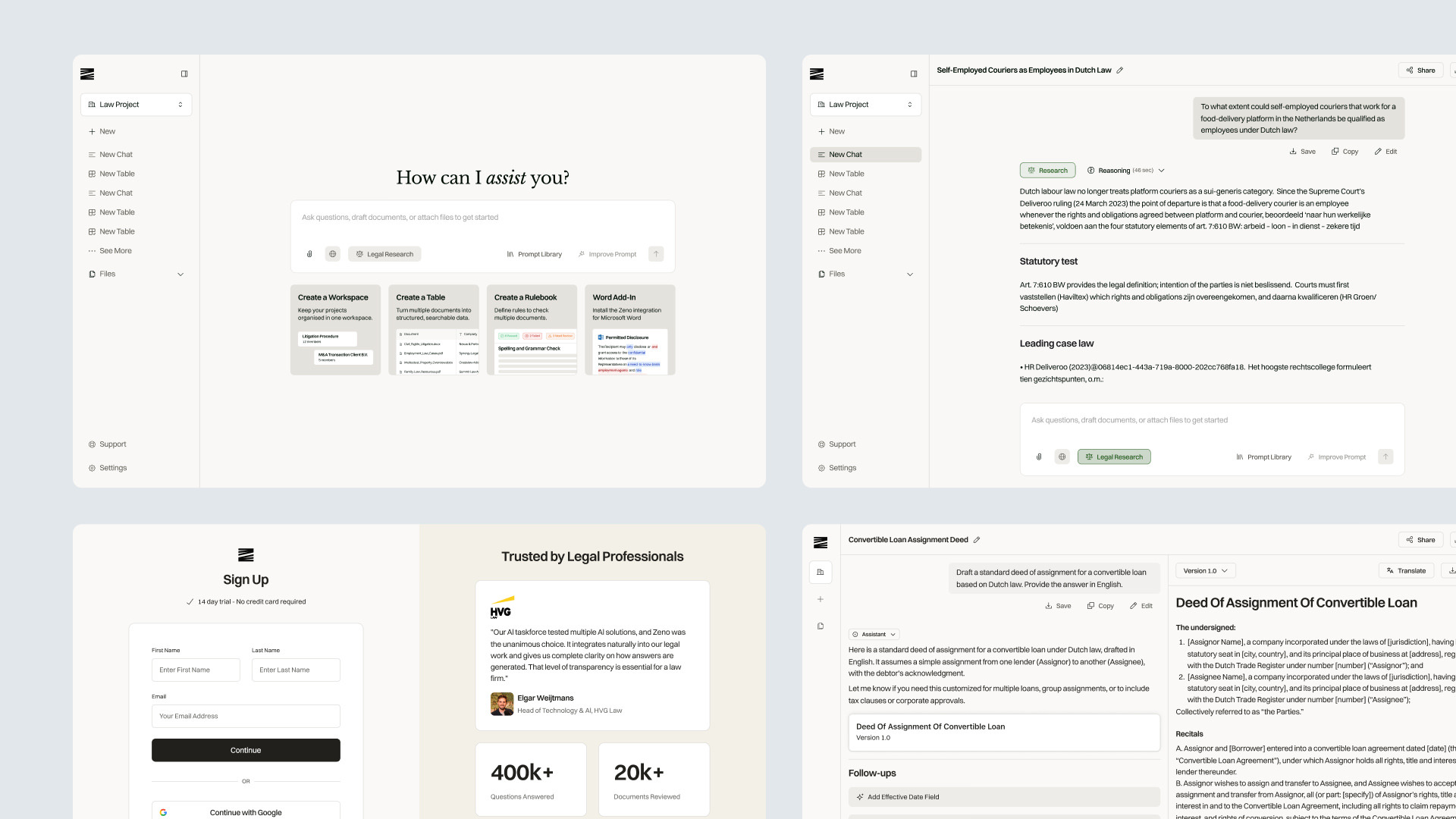
From rebrand to product scale
Redefining how legal professionals work
Lead Product Designer
Legal AI
Design System
Core Product
B2B SaaS
Rebrand to Product
How might we
make AI feel reliable inside legal workflows?
How might we
turn a new brand into a scalable product system?
How might we
help a small founding team ship like a larger product team?
The context
When I started working with Zeno, the company had just completed a rebrand and had a clear product vision but no design system to build on. The team was small - three co-founders - shipping fast without a shared visual or interaction language.
Zeno had already established itself in the Dutch legaltech market with a platform covering drafting, document review, translation, and project management for law firms and legal departments. The product worked. What it lacked was the design foundation to make it feel cohesive, trustworthy, and ready to scale.
The challenge
Legal professionals operate with a high tolerance for complexity but a low tolerance for ambiguity. They read for reasoning, not just conclusions. They cross-reference sources. Every tool they rely on has to meet the same standard of trust and clarity as the work itself.
The platform had grown feature-first. The result was a product powerful in scope but fragmented in experience. AI outputs felt detached from the workflows around them, onboarding did not reflect how lawyers actually start using a tool like this, and the visual language had not caught up with what the product had become.
What I owned
I led Zeno's product design end to end - from the design system through core product flows - working directly with the Co-Founder and CPO to set priorities across onboarding, feature clarity, and long-term scalability.
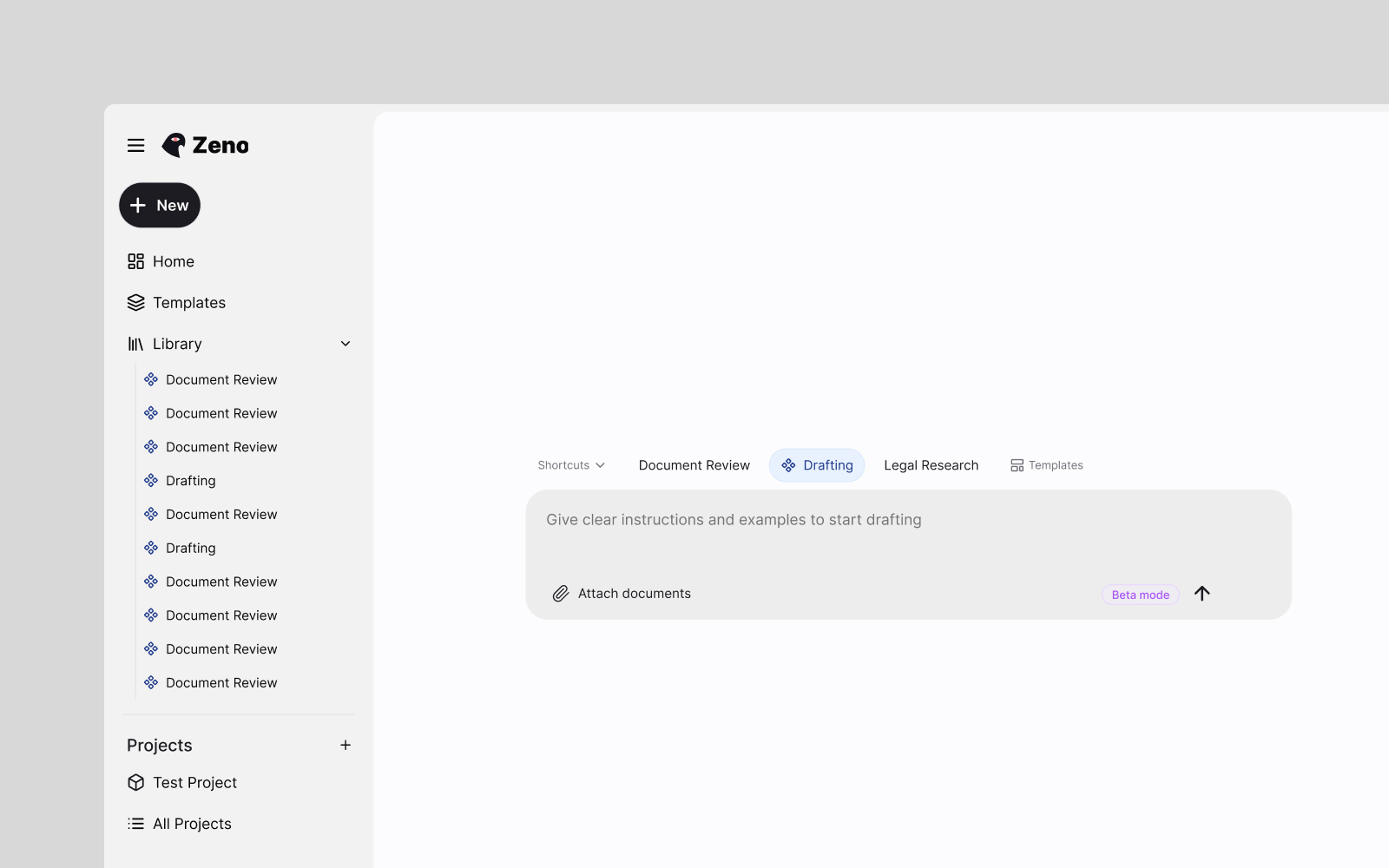
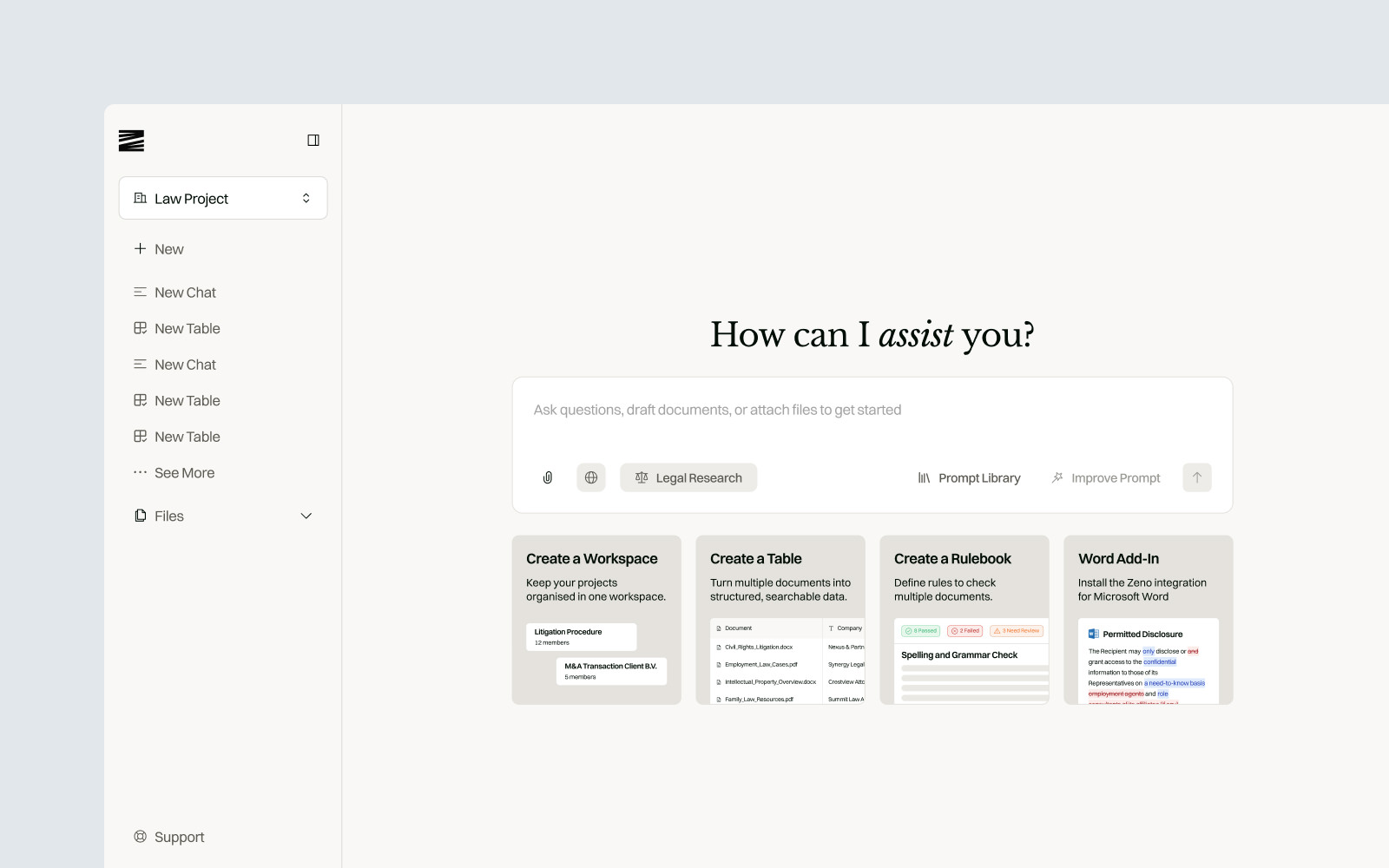
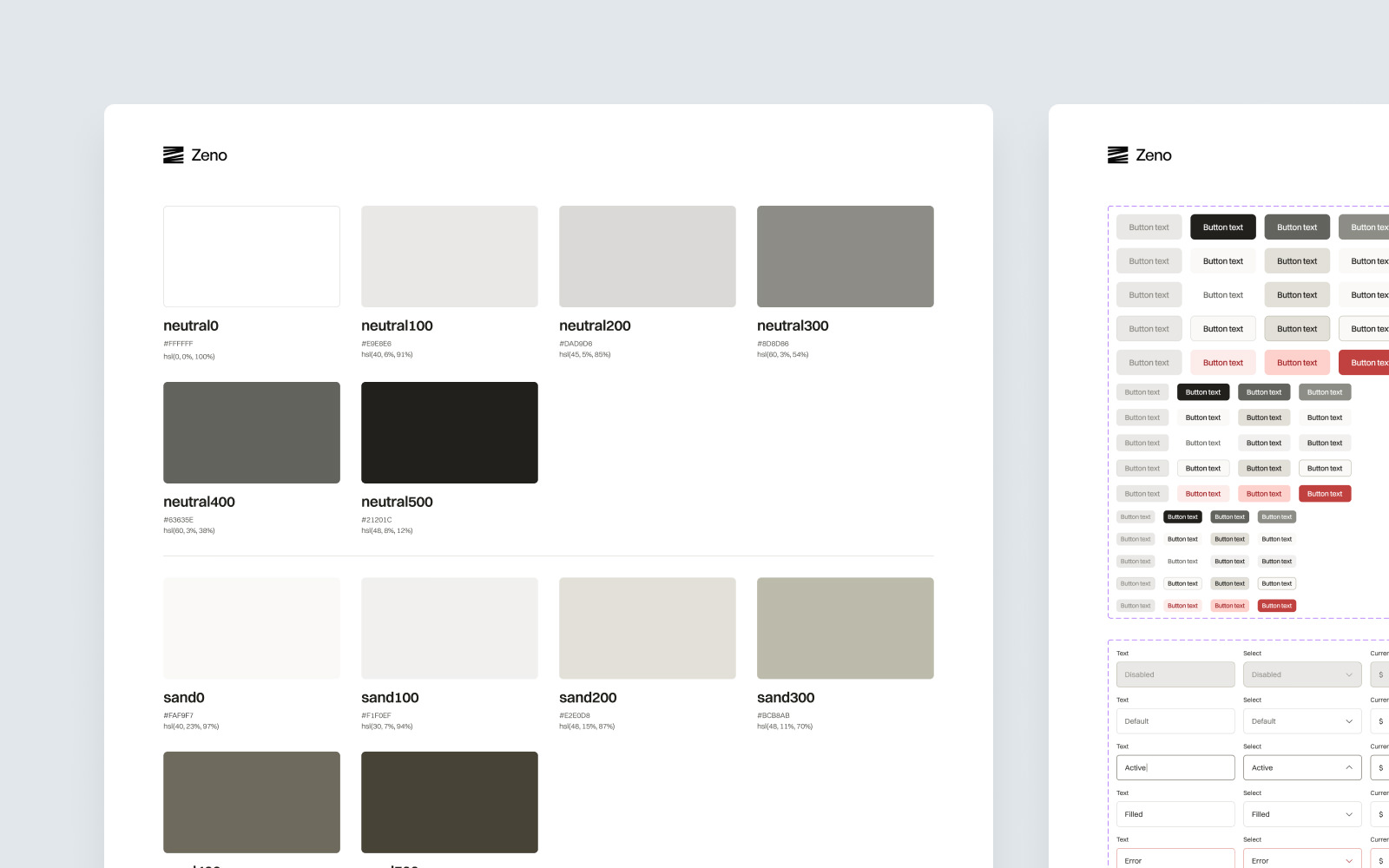
I built the design system from scratch: tokens, components, and interaction patterns the team could use to ship consistently. I redesigned the assistant interface, document review, and project management views. I ran competitive research across AI and legaltech to identify familiar conventions and find differentiation opportunities.
I worked closely with engineering to ensure designs translated accurately, and structured the handoff so the internal team could continue building without losing design consistency.
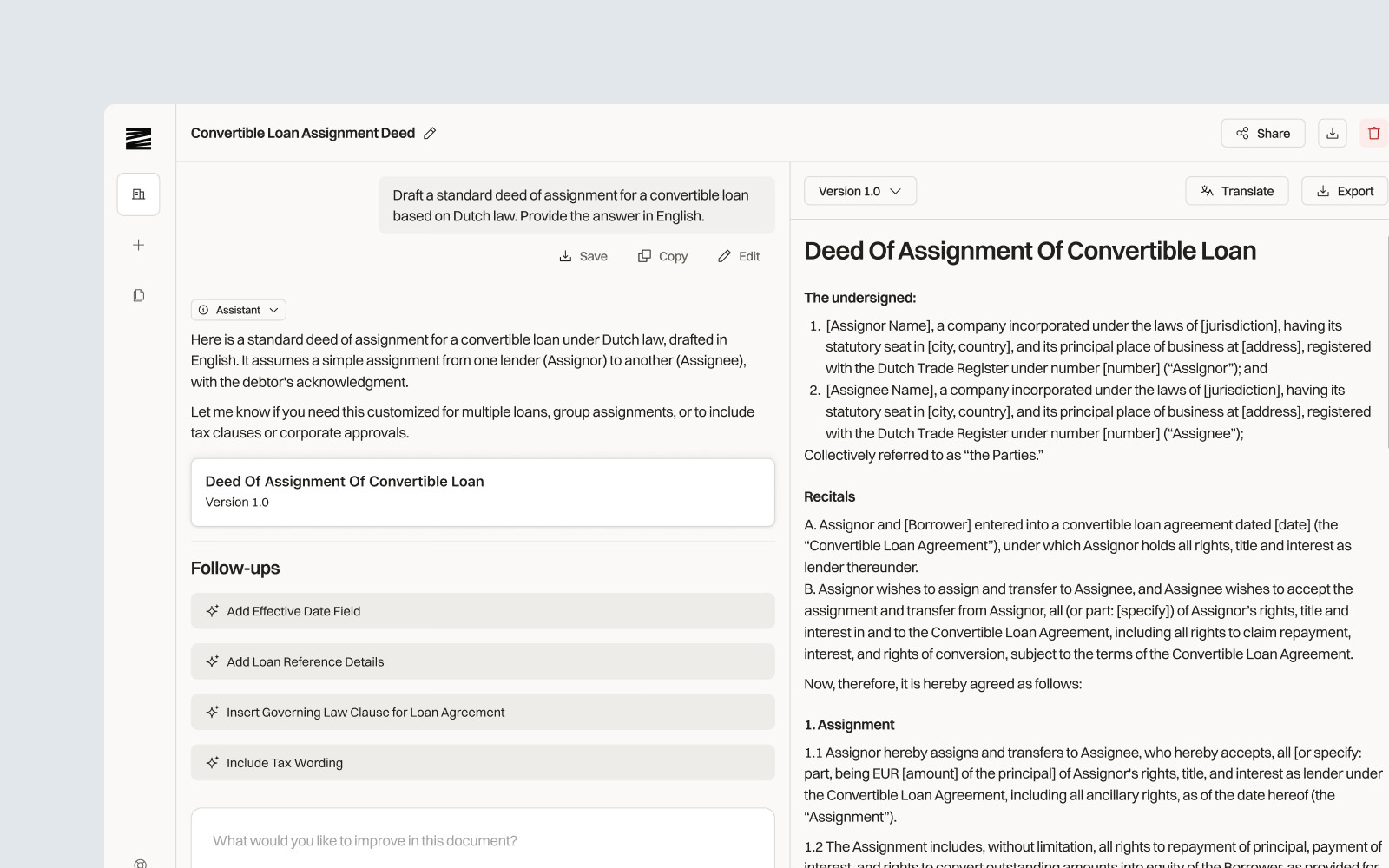
Product redesign - unified AI workflow
Problem: Zeno had several powerful AI capabilities - Assistant, Research Mode, Document Generation, and Document Analysis. Each worked well on its own, but they felt like separate tools. Lawyers had to discover each feature independently and switch contexts often, which slowed adoption and made the product feel fragmented.
Approach: Rather than treating each capability as its own product, I mapped how lawyers actually work: from researching a legal issue, to asking follow-up questions, to drafting documents, to reviewing existing ones. I redesigned around that journey instead of around individual features.
Design decision: I reorganized navigation and core flows so capabilities surfaced when users needed them. Instead of exposing AI features as isolated destinations, I integrated them into a continuous workflow - so users could move between research, drafting, analysis, and conversation without deciding which tool to open next.
Outcome: The platform felt like a single product rather than a collection of AI tools. Users could discover more functionality organically and complete complex legal work without breaking flow. The structure also gave the team a scalable foundation as new AI capabilities were added.
Impact
Zeno grew from a team of 3 to 30+ during my engagement. The company onboarded multiple new law firms, expanded its client base, and grew both recurring revenue and market presence in the Dutch legaltech space.
The design system I built became the foundation for every feature shipped after my engagement, giving the internal team a consistent way to extend the product as Zeno grew.
Why this project is relevant
Zeno happened to serve lawyers. The design problems were not unique to legaltech.
The work was about making AI outputs feel trustworthy inside a high-stakes professional workflow - a challenge equally present in fintech, compliance, and any SaaS product where users need to act on information they did not generate themselves.
It was also about building a design system under resource constraints and handing it off cleanly to an internal team. That is the engagement model I bring to early-stage SaaS and AI companies: structured enough to scale, efficient enough to work within a founding team's pace.
"We wanted Zeno to have Silicon Valley polish, modern and simple, and ahead of traditional legal tools. Jakub’s work made us stand out and compete on a global stage.”